Doing laundry is a weekly ritual that often eats up more time and money than necessary. While the internet is full of so-called miracle solutions, many fall short because they ignore the basic science of fabric care. To separate fact from fiction, we've compiled 19 laundry techniques that are grounded in practical chemistry and real-world experience—each one designed to streamline your routine, cut costs, and keep your clothes looking their best.
One of the most versatile tools in your laundry arsenal is distilled white vinegar. A cup added to the final rinse cycle works to dissolve detergent residue that can leave fabrics looking dull and feeling stiff. The same amount in the rinse can also neutralize mildew and body odors. For front-loading washers, running a hot water cycle with a couple of cups of vinegar helps reduce the microbial buildup that causes unpleasant smells. Vinegar even proves useful for lifting old hemline marks when you've altered garments multiple times.
Smart Solutions for Common Laundry Woes
Lost socks are a universal frustration. A simple mesh laundry bag keeps pairs together through both washing and drying, making it a lifesaver for baby socks and other small items. If you're dealing with a shrunken wool sweater, a solution of cool water and hair conditioner can help relax the fibers. Soak the sweater for at least 30 minutes, then gently stretch it back to its original shape.
For those moments when you forget to transfer clothes to the dryer and wrinkles set in, a handful of ice cubes tossed in with the wrinkled garment on high heat for 10 minutes creates a DIY steam cycle. The melting ice produces steam that relaxes fabric fibers, making wrinkles fall out without ironing.
Baking soda is another powerhouse. Replacing fabric softener with baking soda in the rinse cycle keeps towels absorbent. Adding a cup to bleach loads boosts whitening power. And a paste of baking soda can clean the gunk off your iron's soleplate without scratching it.
Efficiency Boosters for the Modern Laundry Room
To speed up drying, toss a couple of dry bath towels into the dryer with your damp items. They absorb excess moisture, cutting down drying time. For hand-washed garments, a salad spinner works wonders—it removes water without the damaging wringing that causes wrinkles.
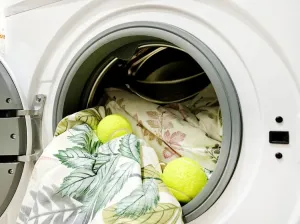
Maximize your dryer sheets by cutting them in half; for large loads, use two halves. If you run out, a ball of aluminum foil can combat static in a pinch. Wool dryer balls are a reusable alternative that soften fabrics, reduce static, and help heat circulate more evenly, which can shorten drying cycles. You can even make your own from an old 100% wool sweater by cutting it into strips and rolling them into balls.
Don't let detergent go to waste. Pry out the pour spout with pliers to access the last of the product, or cut a small notch near the bottom of the bottle. A plastic cap or cup hung under a dripping spout can catch every last drop.
Organization and Prevention Tips
Use erasable markers to leave notes on washer and dryer lids—a helpful reminder for kids or teens about what can and cannot go in the dryer. To remove ink, a whiteboard eraser or rubbing alcohol works well.
Close the narrow gaps between appliances with a slim rolling cart (some as narrow as 5 inches), a pool noodle, or foam pipe insulation. A laundry guard on top of front-loaders prevents items from slipping behind. For top-loaders, a shelf behind the control panels can serve as both a gap closer and extra storage.
To avoid creases when air-drying items like tablecloths or scarves, cut a pool noodle lengthwise and slip it over the hanger bar. Cover it with a white towel or old sheet to prevent color transfer.
Salt is a surprisingly effective stain remover. A sprinkle of table salt on a fresh red wine spill absorbs the liquid before it sets. For blood or rust, a thick paste of salt and water can lift the stain. Always wash the salt out to avoid white marks.
Finally, resist the urge to overload your washer and dryer. Smaller loads allow clothes to tumble freely, ensuring they come out cleaner, drier, and less wrinkled. And if your laundry still feels dingy, consider stripping: soak items in hot water with borax, washing soda, and an enzyme-based detergent to remove built-up residue from detergents, fabric softeners, and body oils.
These 19 methods, drawn from practical experience and basic chemistry, offer a more efficient and effective approach to laundry—one that saves time, money, and the life of your favorite garments.