When your favorite blazer or silk blouse needs professional care, the dry cleaner you choose can mean the difference between years of wear and a one-season wardrobe. But with countless storefronts offering similar services, how do you separate a quality operation from a quick drop-off? Industry insiders and fabric-care experts suggest that the best approach is to ask pointed questions before you commit.
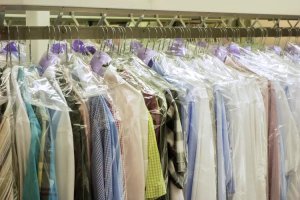
The first step is understanding the business model. In the United States, most dry cleaners fall into two categories: dry stores, which simply collect garments and transport them to a central cleaning plant, and package stores, which own their equipment and clean on-site. If you walk into a dry store, ask how many other locations feed into the same plant. High-volume plants often prioritize speed and cost control over individualized attention, which can affect the quality of cleaning and pressing. Package stores, by contrast, tend to be smaller operations where staff can answer fabric-care questions and address your specific concerns.
Pressing and Damage Policies
Another critical question concerns pressing equipment. Machine pressing uses high-pressure steam to remove wrinkles, but it can be harsh on delicate fabrics and may cause garments to lose their shape. It also fails to produce crisp edges and seams. Hand pressing, while more labor-intensive, is gentler and better suited for embellished items like beaded or sequined pieces. Ask which method the cleaner uses, especially if your wardrobe includes fragile materials.
Even the best dry cleaner can make mistakes. Before you hand over a valuable item, ask how the business handles damaged or lost garments. A reputable cleaner should have a clear claims process and be willing to compensate you for the item's value. Also inquire about pricing: compare costs for a dress, suit, slacks, and sweater, and ask whether men's and women's suits are charged differently. Some cleaners price wet cleaning by the pound, others by the item—know which you're dealing with.
Convenience and Specialty Services
Time is a factor too. Ask about pick-up and delivery options, and whether same-day service is available for last-minute emergencies. While these conveniences may cost extra, they can be worth it for busy professionals. Also, consider whether the cleaner has expertise with specialty items like wedding dresses, vintage clothing, silk, wool, cashmere, or heavily embroidered pieces. Not all cleaners are equipped to handle such delicate textiles.
Solvent use is another area where quality varies. Some cleaners recirculate their cleaning fluids, which can redeposit dirt from previous loads onto your clothes. Ask if they use freshly purified or distilled solvents with every run. Environmentally conscious consumers may also want to know whether the cleaner uses eco-friendly solvents or traditional perchloroethylene.
Understanding care labels is essential. In the American system, an empty circle means the item should be dry-cleaned; a circle with an "X" means it should not. A circle with an "A" indicates any solvent can be used, "F" requires petroleum solvent, and "P" means professional dry cleaning is recommended but trichloroethylene should be avoided. Knowing these symbols helps you communicate with the cleaner and avoid damage.
Reputation and Professionalism
Word-of-mouth remains one of the most reliable indicators. Ask friends, coworkers, and neighbors who always look sharp which cleaner they trust. Online reviews can be helpful, but they're subjective—look for photos of finished garments to assess quality. Local consumer protection bureaus may also offer recommendations.
Before you commit, ask whether a certified professional dry cleaner is on staff. Certifications in environmental dry cleaning, wet cleaning, and traditional dry cleaning indicate a commitment to the craft. Affiliation with professional associations like the Drycleaning & Laundry Institute or the International Fabricare Institute signals adherence to ethical and customer-service standards.
Finally, observe the front-counter staff. A good cleaner will inspect your garments carefully, ask about stains, and offer advice. If the attendant seems indifferent, that's a red flag. And remember, you play a role too: bring in stained items promptly, point out the stain, and identify it if you can. Even the best cleaner isn't a mind reader.
By asking these questions and paying attention to the details, you can find a dry cleaner that will help your clothes last longer and look better—saving you money in the long run.