For many older adults, the daily trip to the mailbox brings a mix of greeting cards, bills, catalogs, and—too often—junk. But as physical mail piles up, it can become a source of stress and even a safety risk, especially for those with memory issues. Caregiving and organizing experts say a few simple habits can help seniors—and the family members who support them—stay on top of the flow.
According to a United States Postal Service study, baby boomers (born between 1946 and 1964) receive more financial, food and beverage, and political mail than any other generation. A Gallup poll adds that Americans aged 65 and older are less likely to choose electronic communication because they enjoy receiving physical mail. That combination can lead to an overflowing inbox, missed bills, and misplaced documents.
Wendy Trunz, partner and head organizer at Jane's Addiction Organization, and John Frutiger, franchise owner of Senior Helpers of Greater Grand Rapids, offer practical strategies for managing mail for an aging parent, grandparent, or friend.
Start at the Mailbox
One of the simplest steps is to label the mailbox. In senior living communities, units often turn over, and mail addressed to previous residents can still arrive. Trunz suggests placing a note inside the mailbox that reads: "Please only deliver mail addressed to [full name]." This can cut down on unwanted mail from the start.
Reduce What Comes In
Frutiger recommends curbing the volume of incoming mail by switching to online statements for bank and doctor's office communications. If a family member manages the mail, they can create a separate email account for the senior's correspondence. For credit card and insurance offers, websites allow consumers to opt out of prescreened mailings, which can also reduce junk.
Cancel Unwanted Subscriptions
Catalogs and subscription-based mail are a major source of clutter. Trunz advises a family member or friend to help the senior go through catalogs and subscriptions they no longer want. Once a list is compiled, she recommends setting aside time to call phone numbers and cancel online subscriptions. This upfront effort saves time sorting later.
Create a Mail Station
Trunz suggests setting up a dedicated mail station in the home, equipped with a garbage can, a shredder, a stapler, a letter opener, and labeled file folders. She recommends sorting incoming mail into three categories: Act (bills, appointments, and anything requiring a response), File (tax documents, medical records, insurance statements), and Toss (junk, expired offers, duplicates).
For magazines and catalogs, Trunz suggests keeping a bin or holder near a comfortable chair so the senior can enjoy them and recycle after reading. Since many retailers send catalogs quarterly or seasonally, it's wise to declutter old issues to make room for new ones.
Set a Regular Bill-Paying Day
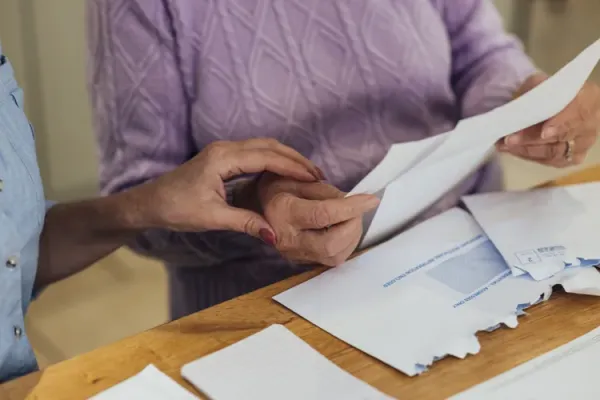
To avoid missed payments, Trunz recommends setting a weekly or as-needed time to go through mail together. "Having support can make a big difference," she says. Frutiger adds that important mail often comes from predictable sources: the Social Security Administration, Medicare, the IRS, banks, insurance providers, and doctors' offices. Watching for these can help prioritize.
Pause and Verify to Avoid Scams
Fraud is a growing concern for seniors. Frutiger advises having a trusted family member or friend review suspicious mail regularly. "Having that second set of eyes can help catch a scam before money or information goes out," he says. Warning signs include mail from unknown companies with "urgent" or "final notice" stamps, fake check windows, unofficial logos, requests for payment to claim a prize, and false Medicare information.
By adopting these habits, families can help seniors maintain independence and peace of mind—one envelope at a time.