Growing up in a house where the living areas were spotless but the home office and storage spaces were in disarray taught one woman the value of order—and the frustration of not finding things. Now, as an adult with her own apartment, she has developed a set of practical strategies that turn the chaos of her childhood into a streamlined system. These methods, which she credits to lessons learned from her mother's cluttered corners, focus on intentional placement, inventory awareness, and documentation.
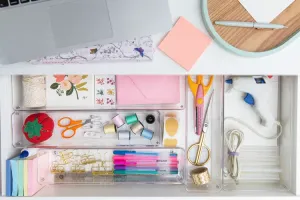
Her mother's home office was a notorious trouble spot, filled with stacks of papers, office supplies, and batteries of uncertain condition. Despite the mess, her mother always knew where everything was, a skill the writer admired but did not wish to replicate. Instead, she adopted the principle of "everything has its place." This means that every item—from important documents to new jewelry—has a designated spot in her home, and she makes a point of knowing exactly where that spot is. This mental map, she says, prevents the frantic searching that was a staple of her childhood.
Why Inventory Matters
To avoid the confusion of missing items and the inevitable phone calls asking "Do you know where X is?", she now keeps a rigorous inventory of her purchases. For example, when she sees a sale on toothpaste, she doesn't have to wonder if she already has a backup; she knows. By keeping backup items to a minimum and tracking what she has on hand, she avoids overbuying and running out of essentials. This practice extends to kitchen staples and other frequently used items, ensuring that she is never caught off guard.
The third strategy involves documenting important items, especially those that are handed between family members. In the past, missing jewelry or car keys often led to accusations and denials. To prevent this, she now makes a note in her phone whenever she receives or hands over something valuable, including a detailed description and the location. She also takes a photo of the item during the exchange, capturing it in the hands of the giver or receiver. This creates a dated record that can be searched later, such as "Abuelita's blue earrings," to quickly locate the item's history. This system has eliminated the "I gave it back" arguments and encourages everyone to search more thoroughly.
These three strategies—assigning a place, keeping inventory, and documenting exchanges—are simple yet effective. They require a bit of upfront effort but pay off in reduced stress and fewer lost items. For anyone who grew up in a similarly disorganized household, these tips offer a way to break the cycle and create a more orderly home.