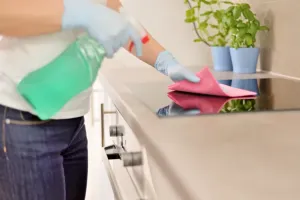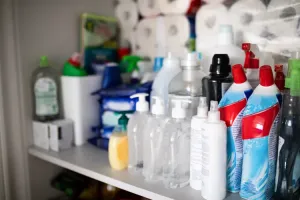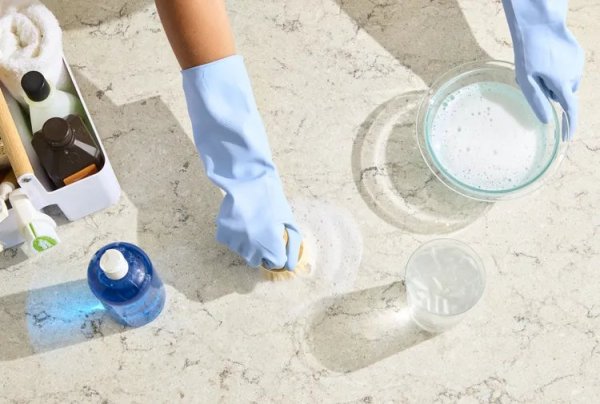
Stone countertops in kitchens and bathrooms may seem durable, but the protective sealant that keeps them looking pristine is surprisingly delicate. Cleaning professionals caution that several everyday household products—from lemon-scented wipes to glass cleaner—can strip that barrier, leaving the stone vulnerable to stains, dullness, and even etching. The safest approach, they say, is to stick with cleaners explicitly labeled safe for natural stone, or simply use warm water mixed with a few drops of mild dish soap.
Sofia Martinez, a cleaning expert and founder of Sparkly Maid Austin, and Elizabeth Shields, operations manager of Super Cleaning Service Louisville, shared their insights on the most common mistakes homeowners make. Both emphasized that while these products might seem effective at cutting grime, they can cause long-term damage that is costly to repair.
Why Lemon Wipes and Essential Oils Are Risky
Lemon-scented wipes are a popular choice for quick cleanups, especially in warmer months when the citrus aroma feels fresh. However, Shields warns that the citric acid in these wipes can gradually dissolve the sealant. “It will start eating away the sealant and once that goes, the stone underneath becomes vulnerable,” she said. A telltale sign of damage is the appearance of hazy or cloudy spots on the surface, which indicate the sealant is already breaking down.
Essential oils, often used in DIY cleaning sprays, are another culprit. Shields notes that they are particularly harmful to unsealed stone and can leave dark splotches. Even on sealed surfaces, essential oils can leave a glossy film that attracts dust, leading to more frequent cleaning. “They get tossed into a lot of DIY sprays, but they don’t belong on stone,” she added.
Abrasive Tools and Harsh Chemicals
Magic Erasers, known for their ability to buff out scuffs on walls and furniture, are too abrasive for stone countertops, according to Shields. “Unlike a regular cleaner that dissolves dirt, this one will scrub it away physically,” she explained. The abrasiveness also wears down the sealant and polish, leaving the surface exposed.
Dish soap with degreasers is another product to keep away from stone. Shields warns that the degreasers can damage the delicate sealant, and once that barrier is compromised, the stone becomes susceptible to damage from even plain tap water. “If that barrier gets damaged, it will be vulnerable to anything, even dullness from plain tap water,” she said.
Glass cleaner, while it may seem like a quick fix for streaks, contains ammonia, which is harmful to the sealant. Martinez notes that it can leave a streaky or rough finish on stone, making it unsuitable for anything other than mirrors and windows.
Read Labels Carefully
Finally, all-purpose sprays are a common go-to, but Martinez advises caution. “If the label on the bottle does not guarantee that it is safe for natural stone, then it is not worth finding out,” she said. Many all-purpose cleaners contain acids or degreasers that can compromise the sealant. In such cases, the simple mixture of soap and water remains the most reliable solution.
For homeowners who want to maintain the beauty of their stone countertops, the experts agree: less is more. Choosing a cleaner specifically designed for natural stone, or sticking to the mild soap-and-water method, will keep surfaces looking their best without risking damage.